Oral Presentation in \(70^{th}\) Annual Conference on Magnetism and Magnetic Materials
Introduction
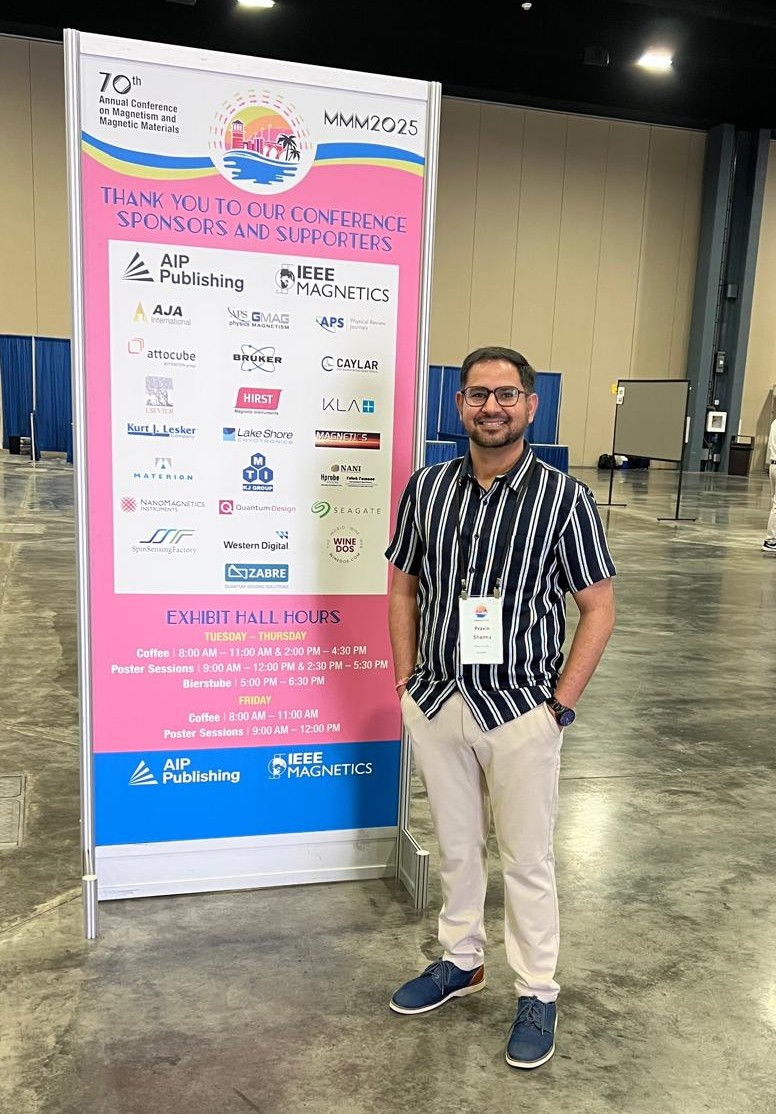
In October 2025, I had the opportunity to present my research at the 70th Annual Magnetism and Magnetic Materials (MMM) Conference in Palm Beach, Florida. MMM is one of the most recognized international conferences in the field of magnetism, bringing together researchers working on spintronics, magnetic materials, and emerging technologies such as memory devices and quantum materials.
Attending this conference was both professionally valuable and personally rewarding, offering a platform to share my work while engaging with the broader magnetism community.
My Research Focus
As a PhD researcher, my work centers on magnetization dynamics in CoFe-based systems, particularly in the context of spintronic devices such as magnetic tunnel junctions (MTJs).
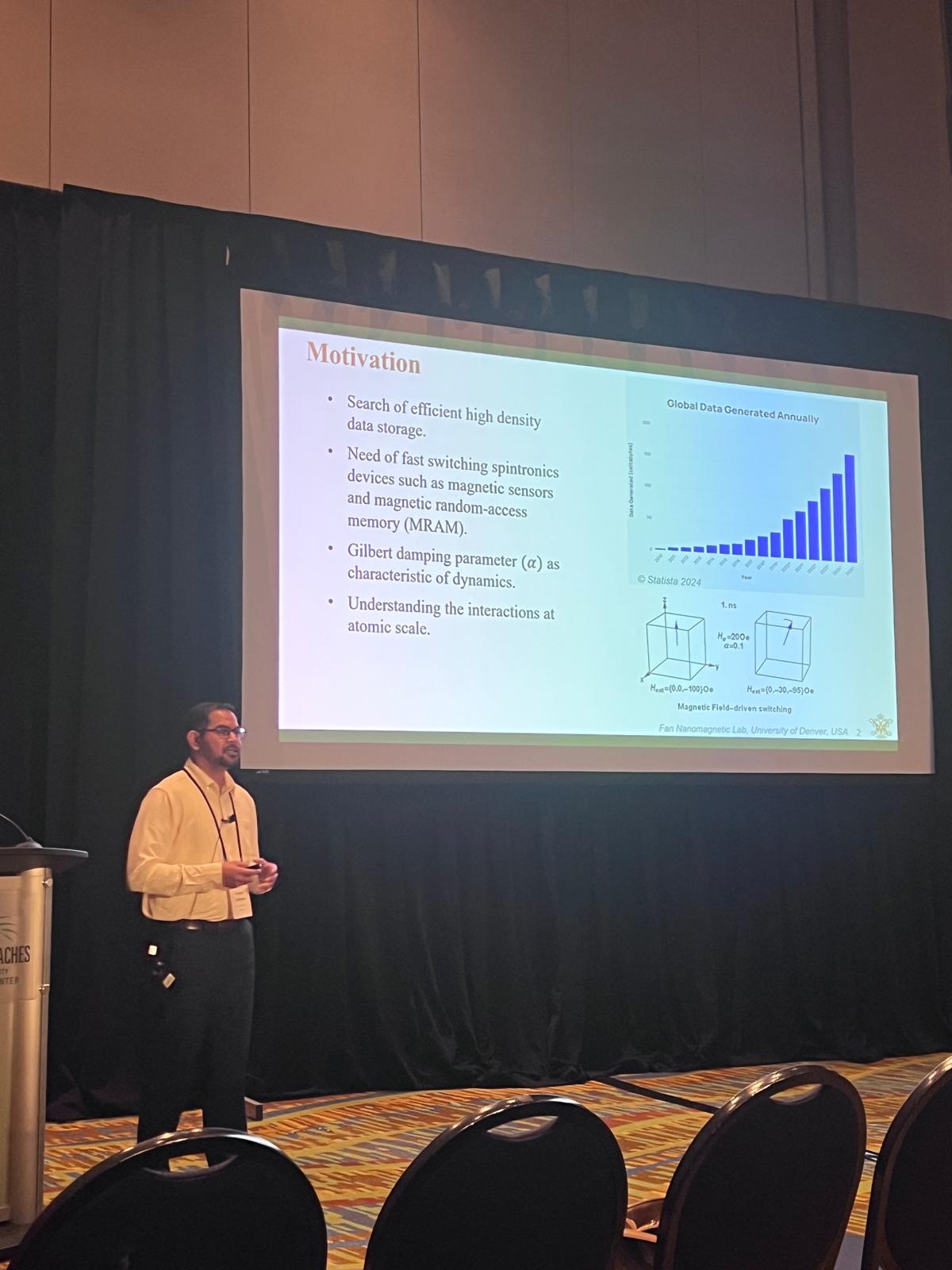
At MMM 2025, I presented my research on:
- Magnetization damping and spin dynamics in ferromagnetic bilayer systems.
- Thickness-dependent behavior of damping and magnetic properties.
- Insights derived from Atomistic Spin Dynamics simulations using VAMPIRE, informed by first-principles calculations.
Highlights from the Conference
MMM 2025 showcased a wide spectrum of research directions in magnetism. Some key trends and highlights that stood out include:
- Growing emphasis on energy-efficient spintronic devices, particularly for next-generation memory technologies
- Advances in Ultrafast Magnetization Dynamics, including femtosecond-scale switching
- Lots of invited talks on SOT and STT technologies,
- Increased focus on interface-driven phenomena, especially in multilayer and heterostructure systems
- Continued exploration of topological spin textures such as skyrmions using NV Magnetometry
Beyond formal presentations, discussions during poster sessions and informal networking revealed a strong interest in linking atomistic simulations with experimental observables, which closely aligns with my research approach.
Presenting and Feedback
Presenting my work at MMM was a valuable experience. The audience included both theorists and experimentalists, which led to diverse and insightful questions.
Some of the most useful feedback I received focused on:
- Connecting simulation results more directly to experimental measurements such as FMR or TR-MOKE
- Exploring interface-specific contributions to damping in greater detail
- Extending the study to include realistic device geometries and conditions
These discussions helped refine how I frame my research and highlighted directions that can strengthen the impact of my work.
Personal Reflections
One of the most meaningful aspects of the conference was the opportunity to interact with researchers whose work I have followed throughout my PhD. Conversations during sessions and informal settings provided clarity on current challenges in the field and exposed me to new perspectives.
Additionally, presenting at an international conference reinforced the importance of clear scientific communication—being able to explain complex ideas in a concise and accessible manner is as important as the research itself.
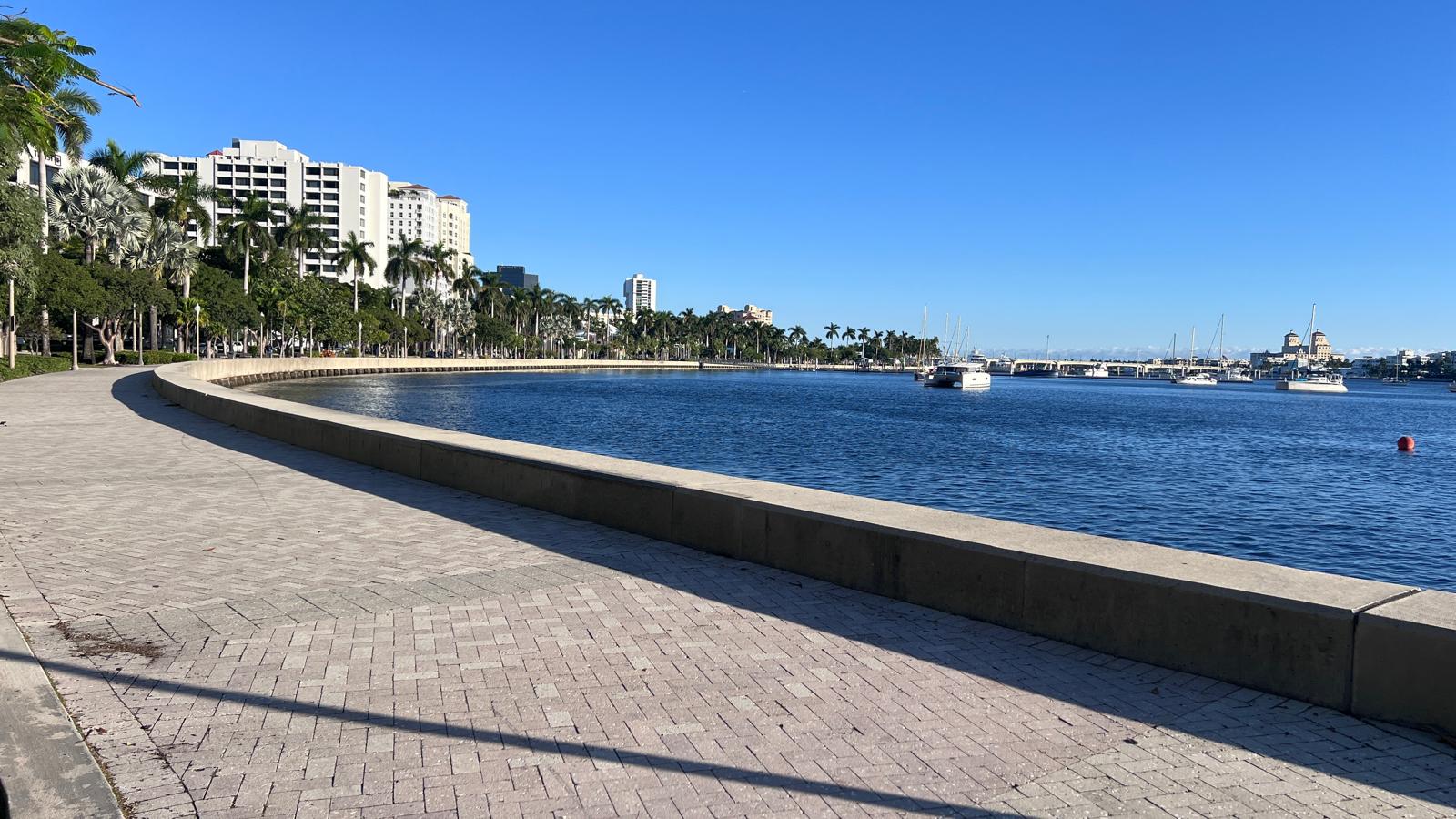
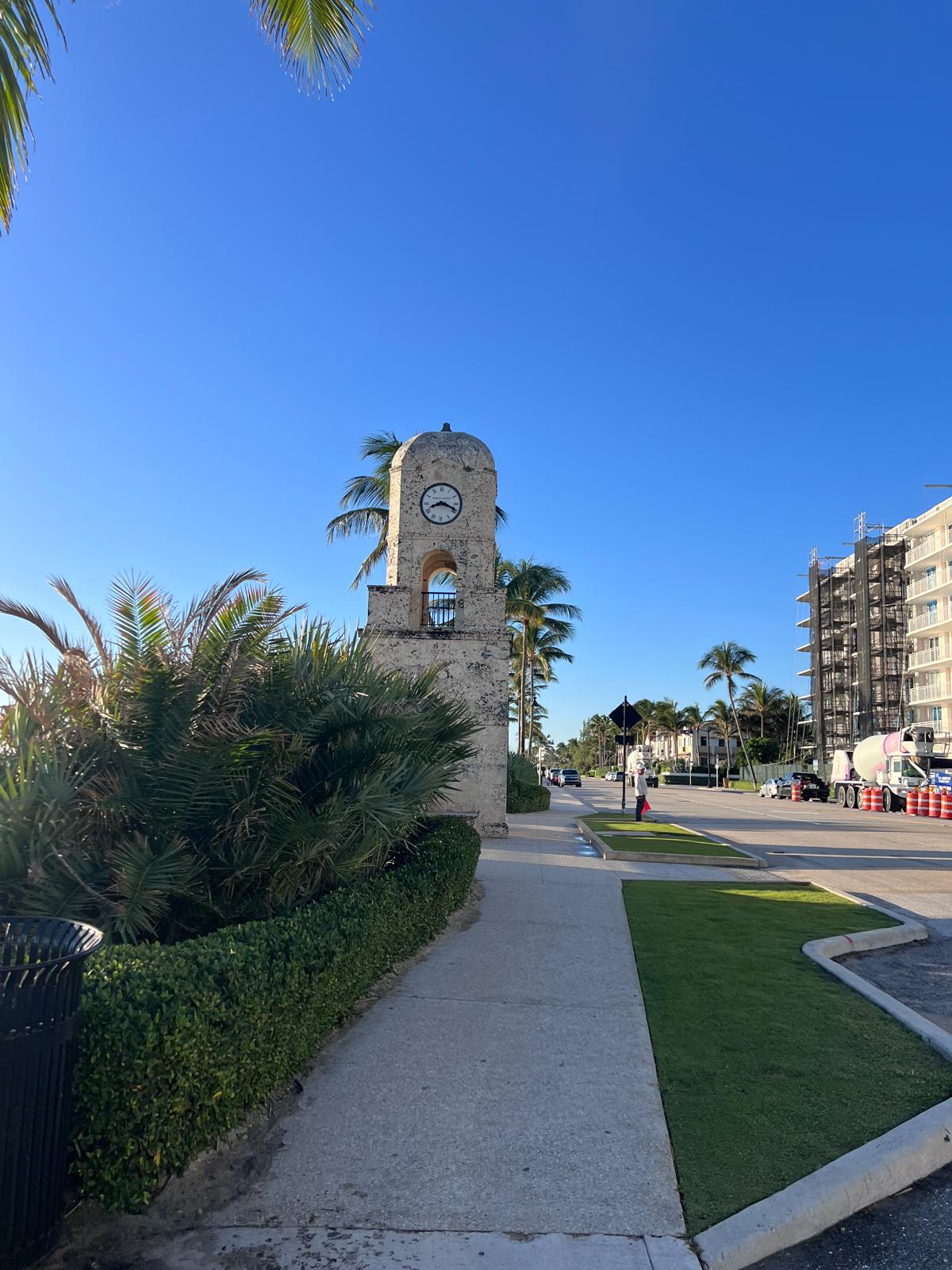
Palm Beach also offered a calm and scenic backdrop, which provided a nice balance to the intensity of the conference schedule.
Looking Ahead
Participating in MMM 2025 has directly influenced how I plan the next phase of my research. Moving forward, I aim to:
- Strengthen the connection between atomistic simulations and experimental validation
- Investigate interface effects more systematically in Ferromagnetic/Oxide systems
- Explore implications of damping behavior for real-world spintronic device performance
This experience has reinforced my broader goal of contributing to the development of efficient and scalable magnetic memory technologies.
Conclusion
Presenting at the 70th MMM Conference was an important milestone in my PhD journey. It provided an opportunity to share my work, receive constructive feedback, and engage with a global community of researchers.
More importantly, it clarified the direction of my research and strengthened my motivation to contribute meaningfully to the field of magnetism and spintronics. I would like to Thank Department of Applied Science, W & M and School of Computing, Data Sciences & Physics, William & Mary to provide support for letting me to attend this conference.
Until next blog…
Namaste 🙏
Enjoy Reading This Article?
Here are some more articles you might like to read next: